[ARTICLE] Should VIP send-off be scrapped?

What is VIP send-off?

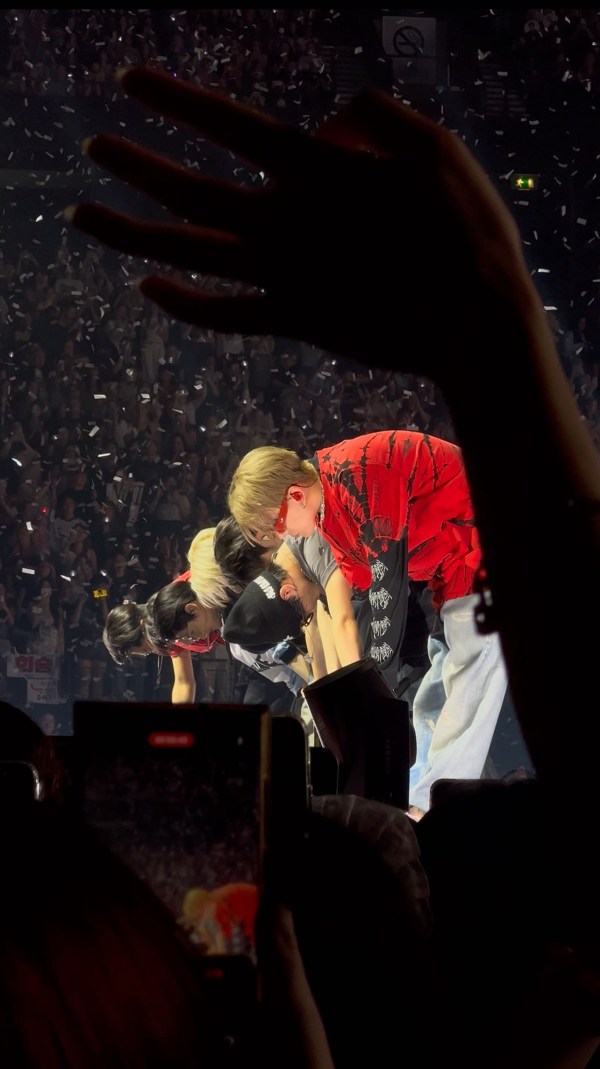
There are many types of tickets – one of them is a VIP ticket (sometimes referred to as VVIP or VVIP+). This is the ticket people usually fiend for as it allows fans to interact with the members after the concert ends. It is typically coordinated by staff, who take these ticket holders into a separate room where interactions happen in rows, depending on the venue’s management. These tickets range from £300-500 for this treatment.

Data Analysis

For this specific enquiry, I conducted my own research with an online survey to find out what people really think of VIP send-off.

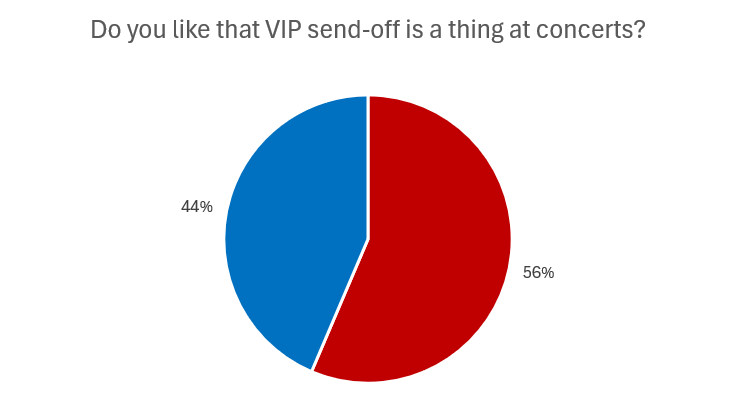
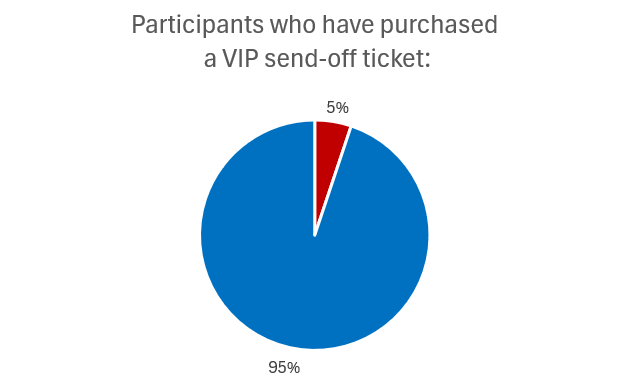
56% of participants said they do like that VIP send-off is an opportunity for concert-goers, whereas 44% disagree. Although 55% like the concept of it, only 5% of participants have actually purchased a ticket. Why is that? Well, good thing I asked 😉! I asked participants how the experience was if they attended, or why they didn’t purchase a VIP ticket.

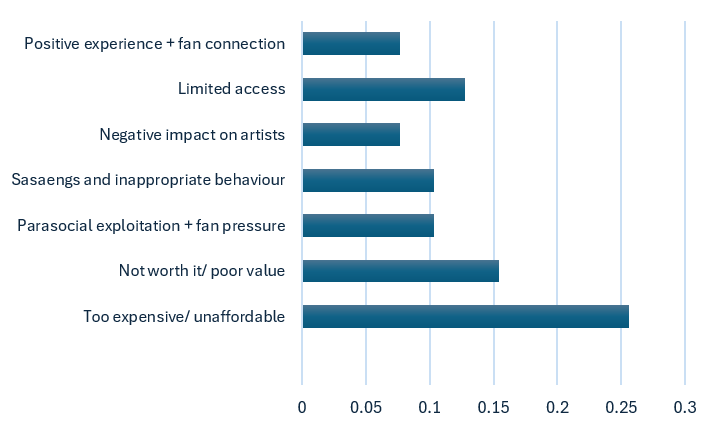
From the figure, the common themes identified are all negative besides one of them which is the positive experience and fan connection, though it is one of the lowest ranked themes (7.7%). Over a quarter of respondents (25.6%) cited cost as the primary barrier, while concerns around value, access, parasocial pressure, and safety each accounted for roughly a tenth of responses.

While the chart highlights the most common reasons respondents have not engaged with VIP send-off, it does not capture the intensity or reasoning behind these views. To explore this further, participants were asked directly for their opinions on VIP send-off pricing and the experiences they have seen which have influenced their responses.

The themes I picked up on from the responses are:

  1. Price-value Imbalance
  2. Inequality and Hierarchy among fans
  3. Organisational Failure
  4. Emotional labour and artist well-being
  5. Parasociality, entitlement and fan-behaviour

Price-value Imbalance:

The prices of these tickets were repeatedly mentioned to be excessive and disproportionate with the time spent with the artists:

  • “Literally outrageous.”
  • “Paying an extra £100-200 to spend maybe 3 seconds with each member of the group (if you’re lucky) is so unfair.”
  • “Daylight robbery.”

Other respondents echoed similar concerns, arguing that no concert experience should exceed £200 without a guaranteed meet-and-greet. Several participants compared send-offs unfavourably to cheaper fan interactions such as fan-calls, questioning why significantly higher prices offer less certainty.

Inequality and Hierarchy among fans:

Participants raised concerns that these tickets were only for wealthy fans and a way of showing superiority to other fans:

  • “Only accessible to people who view that money as pocket change.”
  • “Pressures other people to spend more due to emotional attachment.”
  • “Those with more money get special treatment and feel “closer” to the artist.”

Other respondents claimed to know people who have only gone if they have gotten VIP, and if not they don’t go at all, hinting that they view the regular tickets as inferior.

Organisation Failure:

To actually begin the send-off experience, VIP ticket holders are ushered into another area where they wait for the artists to come in and speak to them. However, from the responses given, majority believe that although the artists are there, it is not enjoyable for everyone:

  • “It’s such a messy way for fans to meet idols.”
  • “Overselling of the ticket makes it suffocating for both fan and artist.”

To elaborate further, people are called in rows, which are randomised and highlights the intensity of the interaction will be based on luck.

Emotional Labour and Artist Well-being:

After performing for a maximum of four hours, which is dancing whilst singing to the best of their ability, they are expected to act over the moon in-front of their fans. Do not get me wrong, I am certain they love their fans, but after a long day, I’m sure it’s not one of the first things they’d like to do.

  • “It dehumanises idols – like they’re just products.”
  • “They have to force a smile after performing for hours.”
  • “Can be stressful having people waving things at you to sign and phones all around.”
  • “It’s draining for both sides.”

Most respondents agreed and said their enthusiasm during this time is situational and may not be a great experience for everyone.

Parasociality, Entitlement and Fan Behaviour:

It is no secret that most fans buy these tickets to stand out amongst other fans and have their interaction go viral on X or TikTok.

  • “Some fans just buy it for a Y/N moment.”
  • “It pushes unhealthy parasocial relationships and blurs the line between admiration and intimacy.”
  • “There will always be “fans” that forget their limits and make artists uncomfortable.”
  • “Fans act absolutely insane and put their idols in danger without realising it.”

It can be frustrating for artists trying to divide their attention to all the fans in front of them whilst they are having their name called left, right and centre.

Anecdote:

For me, I personally do love seeing send-off videos and have wanted to be in the OP’s shoes, but when I actually think about how those people got there, I automatically try to forget about it. I believe spending half a grand on artists, no matter how much they may have helped you, puts them on a pedestal, and makes you seem inferior to them. Also, the artists know how around how much would have been spent to be there. Personally, I’d feel ashamed that I’ve gone to these lengths for an interaction which lasts less than two minutes. However my perspective may be swayed by my religious beliefs.

I believe having fan-meets (ticket-sold, not raffle-won) as separate events would be much more appropriate and hassle-free for both parties.

Oh, how I love being a fangirl.

Today, the 28th November 2025, the MAMA awards was held in Hong Kong – and watching ENHYPEN win the daesang hit much harder than I expected.

It brings me joy to see people win awards because I believe everyone has something to celebrate; the happiness on their faces, the disbelief, the gratitude — it’s such a pure type of moment. There’s something so comforting about seeing people finally receive what they’ve been working towards.

The voting for the VISA Fan’s Choice Award was held from 30th October to 10th November 2025. From then, I made it my mission to vote every day for my ult group – and so did many other ENGENEs. The voting worked so that you could vote once per device, so I even went ahead and asked my family and friends to vote. I may have made promises I did not intend on keeping at all, like owing them a meal if ENHYPEN won… but I’m sure they’ve forgotten about that! When it came to the final vote, I ended up talking to people in my uni who I didn’t speak to regularly just so they could vote — and bless their hearts, they actually did. They were hesitant though, may I add: “Your group better win after this.”

So, today from 10:30 AM, I was watching the awards live, unable to take my eyes off it. Wherever I went, my phone was in front of me — there was no way I was missing any of it. The live vote was announced shortly after and ended within an hour. After a good three hours, it was finally time for the VISA Fan’s Choice Award winner to be announced. I held my breath; it’s almost as if time stood still for a moment. There had been known misconduct with the voting, such as people cloning accounts, so towards the end of the vote ENHYPEN wasn’t placed as number 1. There really was no way of knowing if they were going to win.

I had waited so long for this moment. As soon as the host said “ENHYPEN,” I cheered as if it was my own win. Seeing them get what they dreamed of achieving in 2025 warmed my heart so much. Yang Jungwon — the leader of the group — of course began his speech with, “ENGENE!!!” Bless his heart, he broke into tears after that, and so did all of us who were rooting for them. It was such an emotionally intense moment, even more so for them.

Moreover, they promised their fans they would publish their Chamber 5 (Dream of Dreams) dance practice, and they did – marking 5 years since the original!

This moment made me realise that I am not ashamed of being in fandoms, because this feeling can’t be matched by anything else. Rewatching them being announced as the winners reminds me of the adrenaline I felt, and it was great. I will never grow out of this behaviour, and I am forever thankful I was born with the fangirl gene.

You can watch the announcement of the VISA fan’s choice award here.

Snow Brown: A Muslim twist on traditional pantomime

INTRO

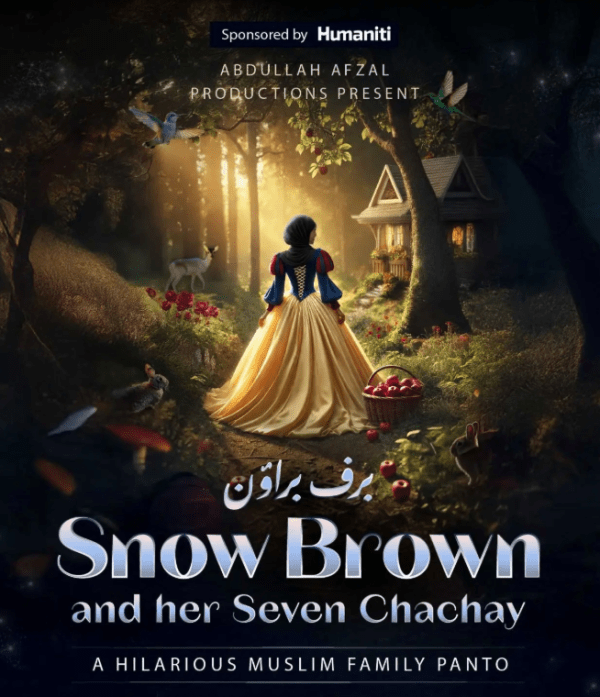
Blending faith, culture and classic British humour, actor and writer Abdullah Afzal is taking the stage once again, this time with his independent production, Snow Brown and the Seven Chachay [Uncles], suitable for the whole family.

This independent production was produced by the original team behind Cinder’Aliyah and Beauty and the Balaah (previously Muslim-inspired pantomimes). It is described as a “a celebration of Muslim life with cheeky panto humour” – the show’s timing during the festive season offers inclusivity for audiences who may not typically feel represented. While Muslims do not celebrate the annual holiday Christmas, productions like Snow Brown allow everyone to share the feeling of togetherness during this time of the year.

Afzal described the show as “Nigel Farage’s biggest nightmare” online, highlighting its light-hearted yet bold approach to diversity on the British stage. Moreover, the production will raise money for humanitarian causes, such as for Gaza and other countries in need.

SPOTLIGHT

I attended one of the Snow Brown pantomimes after not going to pantomimes for years due to the lack of relatability and I was curious to see how this played out. Afzal very kindly allowed me to interview him as I was curious to what inspired him to create this iconic blend of South Asian and British culture of a show.

He said he decided to create a Muslim pantomime to create a safe space for Muslim children to experience the same joy as traditional British pantomimes — but rooted in his own beliefs and morals as a Muslim.”. For example, traditional pantomimes often use crude language and suggestive innuendos — something he wouldn’t want his young children to see.

Afzal understands what the audience wants to see/ how society is currently working; Snow Brown was not the stereotypical Muslim woman who fiends for marriage – “she’s got a bit of bite to her… she knows what she wants… that’s what the modern Muslim woman is like and I wanted to put that on stage,”.

He said his upbringing influenced the pantomime by what he sees in everyday life e.g. the chachays’ [uncles’] behaviour was influenced by his own uncles and how they acted very old-school which explains why we saw their horrific reactions to Snow Brown wanting to marry Prince Khaled (the male protagonist).

A snippet of Abdullah Afzal’s wise words about the pantomime and to young Muslims from the audio interview!

“Do not compromise on your upbringing.. be yourself, enjoy it and tell your story and be truthful to who you are.”

Afzal also spoke to me about a film project he hopes to make, titled Haldi and Milk — it follows a young boy from Bradford who reluctantly agrees to go to Pakistan for his dad and pretends to find a wife. Surprisingly, he does meet a girl and wants to marry her, but she doesn’t want him, which subverts the stereotypes of Pakistani girls yearning for marriage with no other life goals. He wanted to make this film to show people the beauty of Pakistan as most of what is heard about the country is negative. Although funding is difficult, Afzal believes he will make it happen in the next few years!

ANECDOTE

I am so glad Afzal has created something like this for Muslims to look forward to. As a visibly Muslim girl myself, it’s easy to feel like a stranger in predominantly white spaces; this pantomime made me appreciate my culture with humour instead of being ashamed as I have been when I was younger due to the lack of inclusive exposure my childhood in British institutions has been. I hope there are more shows like this to look forward to in the future.

When did entertainment become so stressful? – Squid Game

— This article will contain Squid Game spoilers —

Squid Game is a South Korean dystopian survival thriller horror television series created, written and directed by Hwang Dong-hyuk for Netflix. The series revolves around a secret contest where 456 players, all of whom are in deep financial hardship, risk their lives to play a series of children’s games that have been turned deadly for the chance to win a ₩45.6 billion (US$39.86 million) prize.

INTRO

Before I begin to yap, I am not trying to kill the fun of the show, I thoroughly enjoyed the show, but that doesn’t erase how stressful it is – I was quite literally gripping sofa during Season 3 Episode 4’s game. From the very first season, we are not eased into the horrors it displays, we are flung into high-stakes of violence, with bright colours and eerie music. When did our idea of entertainment become so anxiety-inducing?

DATA ANALYSIS + ANECDOTE WITHIN

Squid Game didn’t just just torment its characters, also the viewers; according to ScreenRant, the second season of the show garnered 68 million views in the first three days and became number one in every country on Netflix! That is insane – we all know good shows but for them to excel everywhere?? What’s crazy is that it isn’t a lighthearted fun show – people were tuning in to feel tension.

A study by Mathias Clasen and Marc Andersen involved running several experiments in a haunted-house setting in Denmark which they called “Dystopia”. They hooked heart rate monitors to the participants and recorded how scared they felt and how much enjoyment they felt throughout. They found the participants’ results to have an upside-down U-shape; if participants weren’t scared at all, it wasn’t fun, but if they were too scared the enjoyment level dropped. Andersen worded it as “It is as if humans dislike being very far from their normal physical state but we seem to like being out of our comfort zone,”. This makes sense when applying it to Squid Game; we do not want real physical harm but we enjoy the thrill – the feeling of being off-balance.

The last game in Season 3 Episode 4, let’s be so for real, we all KNEW that Jun-hee was going to die before she even got eliminated, so why were most of us bawling? Even after that you continued to watch it at “torture” yourself, when you KNEW it was going to be emotionally scarring. ACTUALLY NOT EVEN THAT – WAS SEASON ONE NOT ENOUGH FOR YOU?! God bless my girl Sae-Byeok, Ji-yeong and Ali 😔- literally became ill from the amount of tears that were shed.

Anyway, so you’re not insane for finding joy in these types of shows !

#ileftthisforagessohavelostmyflowimsorryloveyoux

What is authenticity nowadays?

INTRO

Authenticity = The quality of being real or true.

But what the freak even is authenticity now? Is it being unfiltered or vulnerable? Or is it just another brand aesthetic we’ve adopted through the use of social media? BeReals, monthly photo dumps on Instagram, close friends stories with people that aren’t your actual close friends – these are made to feel like we’re showing our “real”. You missed the two-minute BeReal timer? That’s fine, I know you’re going to stage it later, make sure the books are piled neatly, pens angled correctly, like “oops missed the timer because I was revising” – babes I know you were scrolling on TikTok and just took them books out, don’t even. Like we’re low-key performing relatability now; oh you got a matcha latte? Wow you’re so cute and on-trend – YOU DON’T EVEN LIKE MATCHA!!!!

DATA ANALYSIS

I found a few resources online relevant to my area of interest.

One is a study by Chou et al. (2023), she looks into social media platforms such as YouTube and TikTok are central to our entertainment and even as a source of news to young people. The study also talks about how these platforms encourage people to become content creators. I found this relatable because I see normal people, such as my friends, build their own communities by consistently posting aesthetic/ relatable content that people love to see. It’s as if they’re creating their own brand without needing anything “official”.

Another study by Audrezet et al. (2020), explores how social media influencers try to stay “real” in their content. People value genuineness on social media, especially in a space where we’re constantly told not to believe everything we see. But when that little “paid partnership” or “content collaboration” tag appears on a TikTok, you might instantly assume the influencer isn’t being as genuine as they seem — and that they’re just in it for the money, which, when you think about it, might be the main goal after all.

A third study I found explores the psychological effects of social media and influencing by Duffy and Hund (2015); they look at how becoming a content creator often comes with pressure to behave a certain way e.g. always have positive content or content on a specific topic like for a certain fanbase – if they are to deviate from their initial content, will they get the same feedback? If the likes on the post happen to be low, it could take a toll on them and they may think of themselves as boring, when it’s really just the algorithm not adjusted to this new content.

ANECDOTE

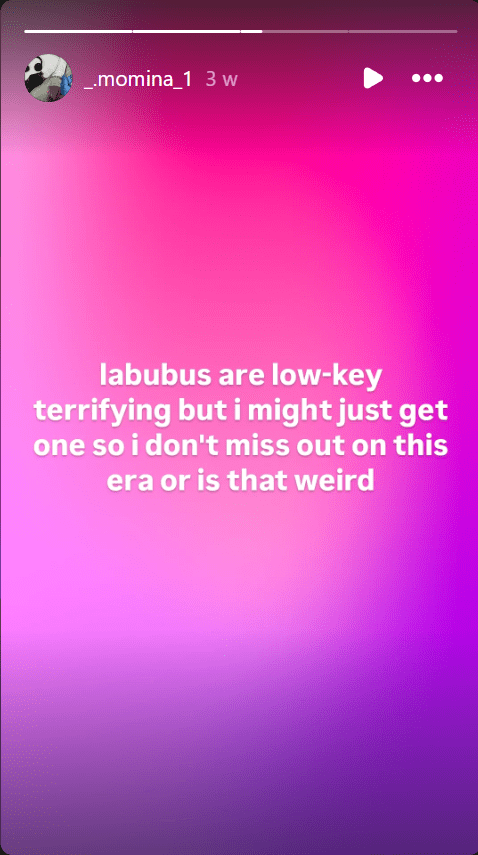
Before I continue, I am not bashing anyone, I am quite literally the same. I am an offender to consumerism the way I will literally buy anything that is relevant at the time just to feel included – that’s not very authentic of me, is it? Heck, I was about to buy a Labubu doll because everyone had one, even though I didn’t see the need for it at all, and was not in a place to be spending any more money on miscellaneous items. I even posted this on my Instagram story:

Multiple people even liked this story, which could potentially mean they agree with me/ had a similar idea. So, what even is authenticity online? Maybe we are posting just to be seen – even if that means posting what we think we want others to see, me included!

Why do brown girls like K-pop so much?

Psst.. it’s more than the music and pretty faces!

INTRO

K-pop = Korean pop: A form of popular music originating in South Korea. It emerged in the 1990s as a form of youth subculture, with Korean musicians taking influence from Western dance music, hip-hop, R&B and rock.

It has in the past decade become very popular due to social media and video streaming apps. For example, if you’re from the West, think back to the very first K-pop song you’ve ever heard and when – I bet it’s the famous “Gangnam style” by Psy which dropped in 2012. This was the first Youtube video to hit 1 billion views. Although people didn’t necessarily understand what was going on, it engaged people of all ages to enjoy the content.

DATA ANALYSIS

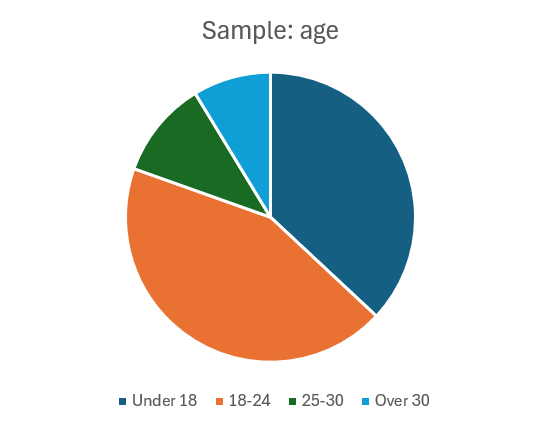
Due to the specific focus of my research, I created a Google Form to collect responses directly from people within the community I’m interested in. I know there might be some limitations with the validity and reliability of the data – such as the sample size being 46 – so this isn’t a super reliable study — but it still gives useful insights!

This pie chart shows the age range of the sample that answered the Google Forms.

Here’s what I wanted to know!

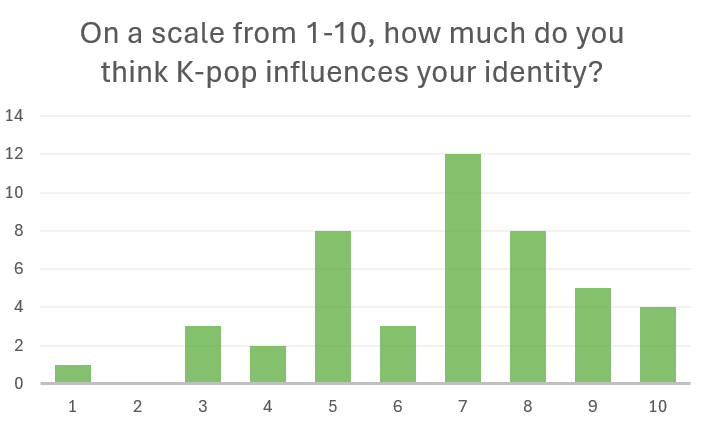
  1. On a scale from 1-10, how much do you feel K-pop influences your identity the most? And why?
  2. Why do YOU like K-pop so much?
  3. What do you think makes K-pop so popular amongst brown girls?
  4. Have you ever experienced any challenges or stereotypes by being a K-pop fan?
  5. Has K-pop influenced your view on your own culture and how?
  6. What do you think your life would be like without K-pop?

Figure 1 represents the answers I received for part of question 1.

Figure 1

Common themes I identified in question 2: “Why do YOU like K-pop so much?”:

Fashion and self-expression“Fashion wise, dance wise, love the work ethic of the idols.”, “How I do my looks like fashion and makeup and how I be so careful about my digital footprint”

Emotional support and belonging“It’s like comfort, and I see myself in them so much.”, “They’re my peace sometimes yk when ppl are too loud.”

Cultural connection and inspiration“As a South Asian second gen immigrant in the UK.. appreciation of Eastern cultures has contributed alot to my identity”, “It helped me feel more content about coming from an Asian background.”

Friendship and community“It’s the first proper interest I shared with my closest friend.”, “I wish I had a friend group like SEVENTEEN – goofy, supportive and full of love.”

Personal development and self-confidence “It has a big impact on my confidence and how I feel in my own skin.”, “Being in the fandom has low-key made me forget what embarrassment even feels like 😭.”

However, will all this being said, not everyone saw it as central or significant to their identity:

  • “It’s just music for me.”
  • “It’s just a hobby. I don’t expect my moral grounding from it.”
  • “It’s more of something that I like, not my whole life.”

This mix of responses shows that, although K-pop isn’t a prominent identity marker for all, for many it subconsciously shapes parts of their personality, interests or how they present themselves – whether that is through fashion, friendships, demeanor or just having something to look forward to!

After exploring how K-pop influences identity on a broad level, I was interested in the respondents’ personal reasons behind this connection – question 3 – the answers reveal the emotional depth behind what many dismiss as just another music genre.

Many participants gave responses that went beyond the music itself; K-pop was described as a comfort/ escape, especially during difficult moments. Majority of the participants said their variety of content (such as vlogs and variety shows) made them feel more connected to idols – not just as artists but as people: “It feels like you really know them.”. Others expressed how the industry focuses on storytelling (concepts), choreography performance and aesthetics provided them with a sense of joy and belonging which they believed was missing from Western music. Several responses also mentioned the feeling of being “apart of something bigger”, whether that was through fandoms, collectively voting for them to win awards or relating to their personalities. These responses suggest that for many, K-pop plays a role in shaping emotional identity and building community, much more than just music.

What do you think makes K-pop so popular amongst brown girls?

Cultural proximity and familiarity- brown girls relate to certain aspects of Korean culture due to similar shared values with South Asian cultures:

  • Honorifics e.g. “baji/ bhai” vs “oppa/ unni”
  • Respecting elders
  • “Korean families are very similar to brown families.. it makes you feel at home.” – despite being foreign, familiarity with collectivism and modesty helps brown girls connect deeply.

Representation – K-pop validates non-western identities and allows people to be proud of those roots:

  • “It was one of the first times we saw non-Western culture being appreciated and taken seriously.” – this contrasts to how the world treats South Asians, although we aren’t from the East, it’s the closest we’ll get for now for a sense of belonging and appreciation.
  • “Seeing non-white idols be famous all over the world just hits different.”
  • “K-pop shows you that you don’t have to be white to be cool or loved.” – brown girls often grow up in Western societies that make them feel marginalised; K-pop empowers them to embrace being “different”.

Escapism – K-pop offers an emotional escape from strict households and stressful expectations:

  • “Most brown girls are not really allowed a social life.”
  • “It’s a getaway from home life and expectations.”
  • “It allows us to explore a part of ourselves we can’t find in our culture.”

K-pop becomes an emotional outlet in environment where expression is limited – a safe place to feel connection.

Fandom culture – K-pop communities provide social connection and acceptance:

  • “Finding people online who share this love has made the experience infinitely better.”
  • “Gives us a sense of freedom to be who we are.”

In restrictive environments, fandoms offer a platform where brown girls can express themselves freely without judgement.

Soft masculinity – It is found that K-pop male idols present a form of masculinity that is much less toxic and more emotionally vulnerable:

  • “They’re not scared to be soft or emotional.”
  • “Male idols can be affectionate and artistic without being called feminine.” – however I may contradict this with K-pop antis who seem to project their own potential insecurities to put them down-!

Brown girls who are raised in patriarchal cultures often find comfort in male idols who are emotionally expressive and don’t embody hyper-masculinity. Interestingly, some Western critics call those into K-pop “man haters”, funny enough the men these fans “hate” are those brought up on Western culture – this contrast highlights possible cultural biases or misunderstandings.

Have you experienced any challenges/ stereotypes by being a K-pop fan?

Many brown girls shared that being a K-pop fan came with its challenges and stereotypes. For example, some faced teasing – “childish” and “crazy” – by those who didn’t understand their passion. One participant said “People think it’s weird or obsessive like I’m too old to be into it.”. Another shared “They’re like “You’re 18 and you like K-pop?”” – suggesting that there is some pressure to “grow out” of it. Others mentioned racial assumptions e.g. “Don’t you like all Asians?” and “My family and friends telling other people I’m going to marry a Korean man 😭like please… (but if it’s Jungkook I’d be getting the rings out right now LOL)” – sorry I had to include the last part of that second one it was hilarious.

Family can also be a challenge, especially in strict households where K-pop isn’t always accepted. As one person explained: “I literally have to hide myself indulging in a hobby yk, can’t watch anything with them around, hiding albums, staying up late to watch stuff in bed with headphones on.. it sucks I can’t be open about my hobby,”. There are also misunderstandings about the language barrier; a few noted people mock them and assume they do not understand what they are listening to as if the Internet doesn’t exist – #IloveGenius.

However, many said that as K-pop’s popularity grows, these challenges have become less evident. A participant shared, “Now, more people get it, so the teasing happens less.”. Others found support online, saying, “Finding people in the fandom made me feel less alone.” Some haven’t faced direct discrimination but have noticed subtle judgment, like being given side eyes for their interests.

However, despite these challenges, many of the respondents expressed pride in this and said the fandoms they are in are seen as a safe space where they can be themselves with no fear – “It allows us to explore a part of ourselves we can’t find in our culture.”

Has K-pop influenced the way you view your own culture and how?

Many participants said that K-pop has definitely influenced how they view their own culture by similarities in discipline and family values. For instance, one respondent shared “Seeing another culture hold onto their traditions and still be global made me think maybe ours isn’t something to be ashamed of either.”. Another said, “It made me realise how much we suppress fun or creativity in our culture, especially for girls.”. It low-key exposes the flaws in your own culture – stuff you never questioned starts to feel unfair.

Still, of course I’ll include all perspectives given and not make this a one-sided argument. A few participants said that K-pop didn’t really affect how they view their own culture“It’s just music. I don’t connect it to my culture at all.” So, while some brown girls reported deeper cultural reflection because of K-pop, others kept the two things separate, which could be due to a confounding factor such as age or how deeply they engage with the genre.

What do you think your life would be without K-pop?

This question received some of the most emotionally reflective and detailed answers in the whole Google Forms. Many respondents couldn’t imagine a version of themselves without it, not in a way that you’d call dramatic, but honest. One said, “Honestly, as dark as it sounds – I probably wouldn’t be here without BTS. K-pop helped me learn to love myself.”. This type of emotional impact elucidates how K-pop and its inclusions have acted as a support systems during major life events: “As dramatic as it sounds, K-pop was there when I was doing my GCSEs, A-levels, graduating university, getting a job in healthcare and even getting married.”

There were also practical lifestyle changes; people spoke about learning new languages, gaining the confidence to travel and even pursuing different careers due to K-pop. One participants wrote, “In the span of 4 years, I learnt Korea and studied abroad in Korea.. I think that experience changed how I view the world.”. Another added, “I think it changed a lot about how I look at the world, take up information and apply it. If I become a national-level government employee with a deep interest in geopolitics because of a playlist, it was all worth it!”

Then there were answers that were less intense but still honest, which I appreciated as it gives me a range of data to work with. Responses like: “I’d probably just be into other hobbies,” or “I think I’d be fine without it.” A few responses acknowledged they had moved on from it – “I used to be deep into it, but I’ve grown out of it now.”. Even so, the general pattern was clear – most participants felt that K-pop shaped their identity, built community and gave them something to feel excited about. One summed it up as, “Without K-pop I’d be more reserved and cold,” while another jokingly said, “I’d probably be getting more than 7s in my GCSE’s”.

ANECDOTE

This research isn’t focused on numbers — it’s mainly about the rich, personal stories and experiences that provide deeper insights into what it means to be a K-pop fan like me. I’m a brown girl who doesn’t fit the typical image people visualise when they think of a K-pop stan. I don’t go to concerts nor spend my savings to win a fancall with my bias, but I still value it as a reminder that connection doesn’t have to be loud.

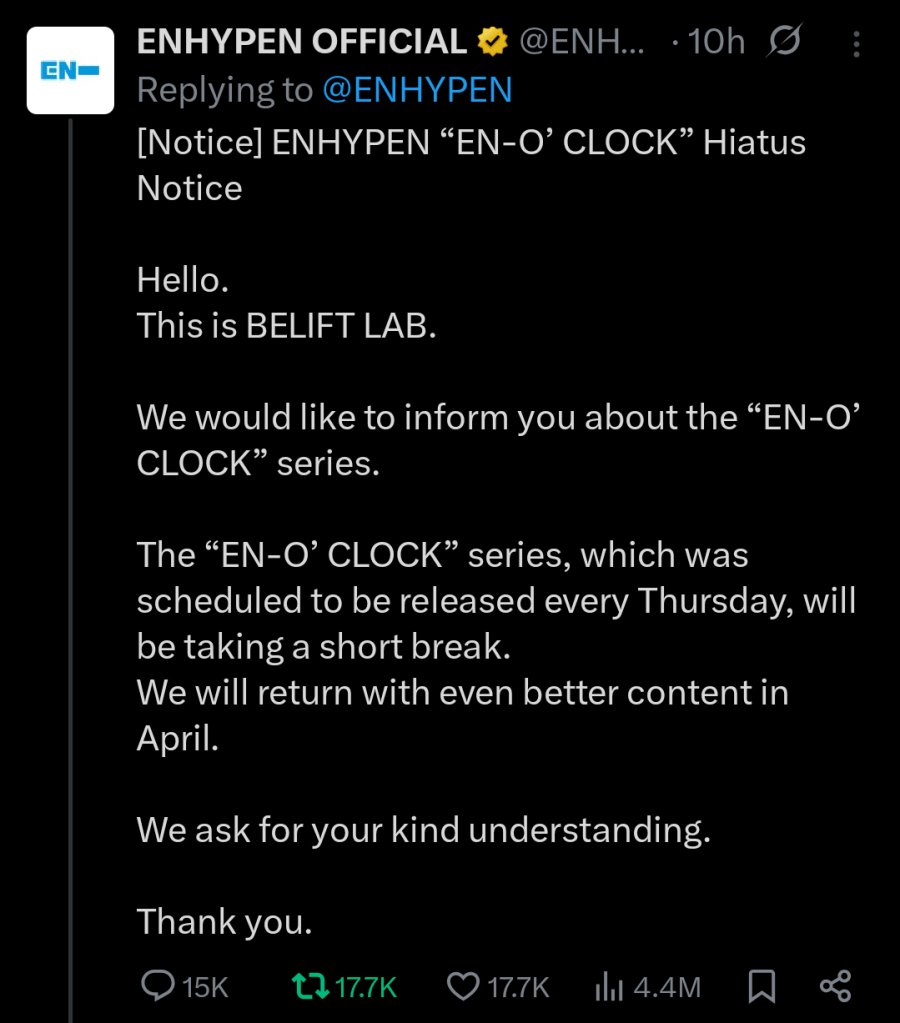
For me, groups like ENHYPEN are more than just a K-pop group — they’re a quiet source of comfort even from miles away. Watching their variety show Eno’clock genuinely brightens my day. It may seem minor, but “Just got to make it to Thursday” has become the new “Just got to make it to Friday” for me!

That might sound pathetic to non-K-pop stans, but I’ve come to not care. People will criticise you for anything — you can’t please everyone. So let them hate; I’m sorry they’re miserable while I know what makes me happy, lmao!

This feeling differs from when I hyperfixate on Western celebrities or groups because with K-pop, you can tell the artists really appreciate their fans. It’s nice to feel like you’re part of something, even if you’re not the one on stage. For example, ENHYPEN has won a few awards and they always start their speeches with “Engene!” — such a small thing, but it makes me feel appreciated, even though I’m just One In A Billion.”

Create a website or blog at WordPress.com

Up ↑