[ARTICLE] ENHYPEN Leader Speaks Up On Member Line-Up


On 9th July 2026, ENHYPEN leader, Yang Jungwon, speaks up on the member line-up on a Weverse livestream after their Peru stop of their BLOOD SAGA tour.


Jungwon stated that he started the live solely for the reason to speak up about the recent controversy within the fandom. The translation of what he spoke about in his live is shown below:


Translation Credits – @/AsiaEnhypen on X

There is a lot of uproar on social media regarding his statement. Jungwon said, “..people have been saying we haven’t given them a proper statement, and they’ve continued to bring up the number of the members.” Fans were not given a clear statement about the ex-member’s departure – that is factual. The only thing fans were given was a notice with no prior warnings. Moreover, Jungwon did not mention his name at all, but everyone knew who he was talking about – Lee Heeseung.

Jungwon is not wrong for speaking up, it just sparks confusion and more conflict within the fandom. For example, on the 4th July 2026, ENHYPEN performed in Brazil and the fans were recorded singing the original fan-chant very clearly during their song Go Big Or Go Home. The members were seen smiling throughout, no signs of discomfort. Although nobody can prove how they actually felt. If they did feel uncomfortable with it, why did they choose that song for encore where they did the 7-chant again? One of the other members (Kim Sunoo) even caught Heeseung’s representative plushie happily and placed it on the stage with them, when he could have thrown it back to the fan – view here.

Fans in Peru also did the 7-chant, the concert the 6 performed at before Jungwon went on live. This can be seen in a clip posted on X here.

His statement started to make little sense when he said, “I’m not saying that our concerts in Brazil and Peru were bad. They were amazing.” It is confusing because he just touched on how it makes them uncomfortable and the known highlight of these concerts were the fans representing themselves as “ot7 fans”. It is strange that this is being said now, rather than when there was clear conflict in the crowds at their concerts and the fan-chant being an inaudible mix of the old and new one.


As mentioned above, fans were conflicted by this and with each other. They flooded social media with their thoughts, theories and responses to his statement.


@/Hee_is_7 on X


@/tylinqt on X

@/LV1Y7en on X

@/Lucifertxxth on X

Time will tell whether the fans will adhere to this statement with their other tour stops, but it is very clear that this only separated the fandom even more.

[ARTICLE] ENHYPEN’s Brand Renewal:


On 22nd June 2026, ENHYPEN’s official Instagram posted a reel insinuating a change in their theme and ended in their new logo which used to be “EN-” to now “EN” encased in a black box.


On the 21st June 2026, fans noticed ENHYPEN’s profile picture on all platforms to have become intentionally blurry – speculations involved it being coincidental for this to happen the day the ex-member of the group debuted as a soloist.

@/enhypen blurry profile picture on all platforms on 21/06/2026

The post that was uploaded the next day left fans in confusion and excitement. Many fans believe this rebrand is happening due to the departure of a member, so that instead of him “haunting the narrative”, they are making a new impression as a 6-member group.

On 27th June 2026, BELIFT released a Brand Renewal Film, visually presenting the change in logo and how it has changed. Instead of them previously being “connected” with the hyphen, they have entered a new dimension and became one inside the hyphen (the logo).

NEW DIMENSION BEYOND HYPHEN
Screenshot taken from the Brand Renewal Film.
The official rebranded ENHYPEN logo/s
Screenshot taken from the Brand Renewal Film.

There are speculations about whether this will weaken their vampire storyline or enhance it – with this new era in motion, fans can only wait in anticipation for what ENHYPEN will release next.


-cover image credits

[ARTICLE] EVAN Releases Album – RIDE OR DIE:
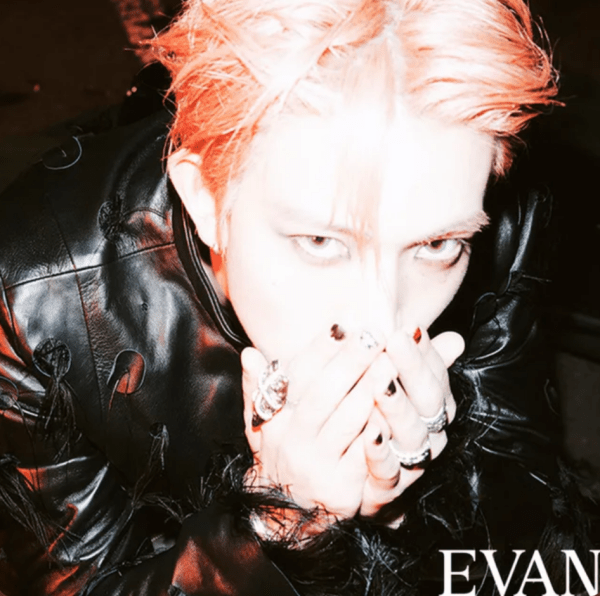

On 22nd June 2026 at 6PM KST, Evan, also known as Lee Heeseung, dropped his first solo album – RIDE OR DIE.

His solo debut album consists of two tracks – Overflow and Ride or Die, both with contrasting themes. Overflow has a soft, sentimental vibe, whereas Ride or Die is more hyperpop.

Evan on Weverse live (22/06/2026) about the making of Overflow:

I wrote it during a difficult period of my life. It was a period when countless emotions surrounded me, yet they simply wouldn’t resolve. The verse starts as if there is no hope, but in the hook, the line “Here we go again” is repeated, looking towards hope. In the end, it is a story about overcoming hardship.”

The music video for Ride or Die compliments the song’s themes through a symbolic narrative. In the opening scenes, Evan is shown alone, disconnected from and ignored by those around him, while a mysterious car follows him throughout the city. The imagery creates a feeling of uncertainty and restlessness that matches the song’s energetic sound.

The turning point arrives when Evan enters the very car that has been chasing him. Accompanied by the lyric, “It’s gonna be alright,”. This moment suggests a shift in mindset, from being pursued by uncertainty to confronting it head-on. The atmosphere changes noticeably afterwards – rather than ignoring or judging him, the people around him begin dancing around him as he is on-top of the car. This contrast between the beginning and end of the video reinforces themes of self-acceptance and confidence. As Evan has described his music as reflecting himself, the narrative can be interpreted as a journey towards embracing one’s identity and moving forward with conviction.


The debut of the soloist garnered lots of expectations and reactions online due to his previous music presence in the K-pop group, ENHYPEN. Many fans (known as EVER) even had theories to what the Ride or Die music video was trying to convey:


@/evanmoncheri on X

@/seungulls on X


@/Enhypen7nimu on X

@/heesilver on X

@/lucifates on X
@/heeluvsramen7 on X

The posts online range from high praise to deep analysis of Evan’s debut.

As this marks a new era, Evan is expected to appear on various music shows and broadcasts, including KBS and M-Countdown, as the promotion cycle begins to unfold. And with this new era in motion, fans can only wait in anticipation for what Evan will do next.


-cover image credits

[ARTICLE] The Grammys Best Asian Pop Music Performance and Best Latin Song Category – What I Think.


The Grammys have announced 5 new categories for 2027. Two of these being, “Best Asian Pop Music Performance” and “Best Latin Song”.

Best Asian Pop Music Performance will acknowledge artistic excellence within Asian markets including K-pop, J-pop, C-pop and more.

Best Latin Song will acknowledge songs sung predominantly in Spanish (at least 51%).


At a glance, this seems inclusive, as if the Grammys are open to exploring cultural diversity by adding a category dedicated to them. However, it may also seem that it is a subtle move at cultural segregation.

I believe the mass popularity of the film K-pop Demon Hunters had a part in the Best Asian Pop category’s decision as the song Golden, from the film, won Best Song Written for Visual Media. Previously, BTS and Rosรฉ (BLACKPINK) were nominated for Grammy awards but their music didn’t win, this was the first win a K-pop performance had ever gotten. Ironically following this win, there had been an update for the next Grammys for a category dedicated to Asian performances.

On one hand it may give light to performances which believe that they will have a safer bet of winning, and that it may be similar to competing in their home countries for awards. Personally, I do not believe this is as great as it may seem due to the fact that the US, where the Grammy Awards are held, is a multi-cultural country. Diversity is very prominent in the US, so why should a certain region of rising industries be singled out? Bad Bunny, a Puerto Rican who sings in Spanish, won Album of The Year for the Grammys 2026 and previously won others e.g. 2021 he won a Grammy for Best Latin Pop Or Urban Album. There has been no European category introduced since his wins, yet strangely there is a category introduced (Best Latin Song) for when another non-white piece – K-pop Demon Hunters, a song from a childrenโ€™s film – won one.


To me, it seems as though the Grammys are trying to keep Western music dominant in the overall Grammy statistics by creating a separate Asian and Latin category, rather than allowing these pop artists to compete within the same award counts.

Despite all of this, I will never truly know the intent behind this decision.

[ARTICLE] EVAN Announces Solo Debut with RIDE OR DIE:
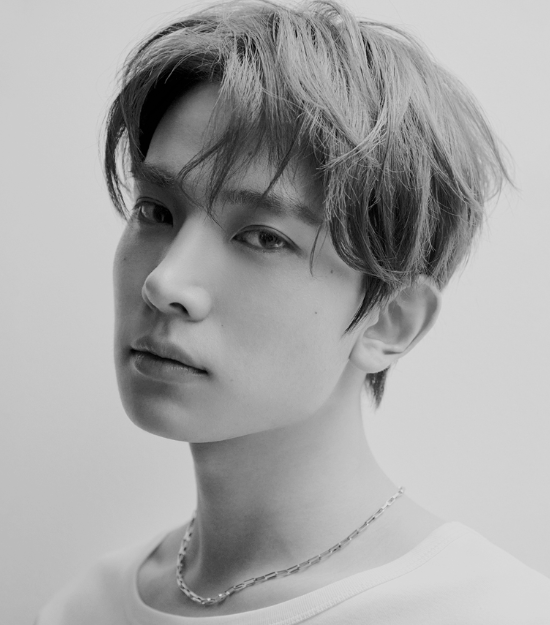
EVAN is debuting with RIDE OR DIE on 22nd June 2026.

The debut was revealed through a short announcement video showing EVAN browsing images on a laptop. The video concludes with the title RIDE OR DIE and its release date, confirming his solo debut on June 22.

Shortly after, BELIFT LAB followed up with a Weverse notice, introducing his official social media accounts including Instagram, TikTok, YouTube, X etc.

The debut marks EVAN’s first official music release as a solo artist. Since adopting the stage name EVAN, fans have been eager to see what direction he would take musically and creatively. RIDE OR DIE will offer listeners their first full look at his identity as a solo performer.

At the time of writing, details regarding the song’s genre, concept and accompanying promotions have not yet been revealed. However, the announcement has already generated excitement among fans as they await further updates ahead of the release date.

The title RIDE OR DIE is particularly intriguing. This phrase is commonly associated with unwavering loyalty and commitment, therefore, the phrase may resonate with fans who have continued to support EVAN throughout the changes in his career. While the meaning behind the title has yet to be explained, some listeners may view it as a reflection of the strong tie between the artist and those who have remained by his side.

-cover image credits: EVAN’s Weverse-

[ARTICLE] EVAN on Weverse At Last But The Fandom Remains Divided
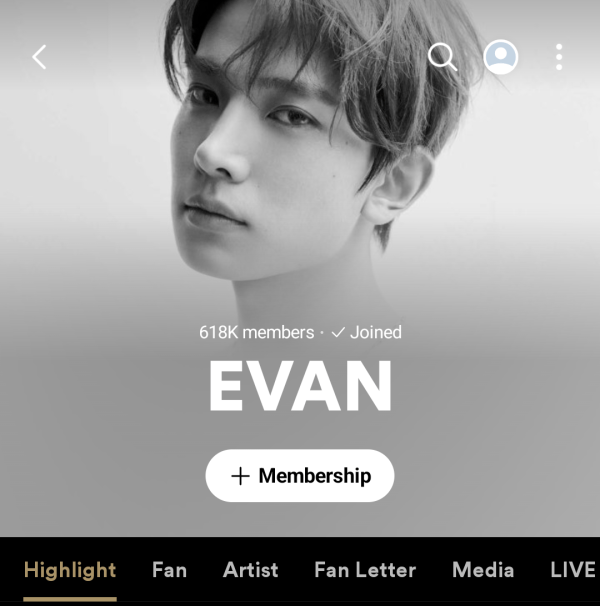

On 18th May 2026, the K-pop soloist Evan had a Weverse account opened for him for his upcoming project announcements and to connect with his fans. He held his first livestream on this account shortly after the account was established.

This caused an emotional conflict for fans across social media platforms.


Fans shared their opinions of this on the social media platform X:

@/riceshimura on X

@/misoseung on X
@/hoonislatte on X

@/itsjaeyunnie on X


@/tylinqt on X

@/tylinqt on X


@/seungulls on X

@/heeskiss on X

@/hevanlyrem on X

@/CHCร˜NNE on X

@/evanacee on X

@/evxnilla on X

From the tweets provided, fans are more accepting towards his solo career than they have been before when they had first heard of this transition. For them to actually see Evan on a livestream interacting with them, it was some kind of closure for them, as most of the fans are now speaking excitedly of his upcoming debut and wishing the best for him, rather than reminiscing with heavy hearts. Although some are still quite upset and some fans are even at conflict with each other, the overall demographic of fans are looking up to see what’s actually in store for Evan’s future as it is actually moving in real-time rather than just words i.e. the departure of ENHYPEN and a solo career was mentioned with no solid, visual evidence or reassurance.


– cover image credits: Weverse – EVAN subscription cover page-

[ARTICLE] LNGSHOT’s Fan-Sign in London – February 2026
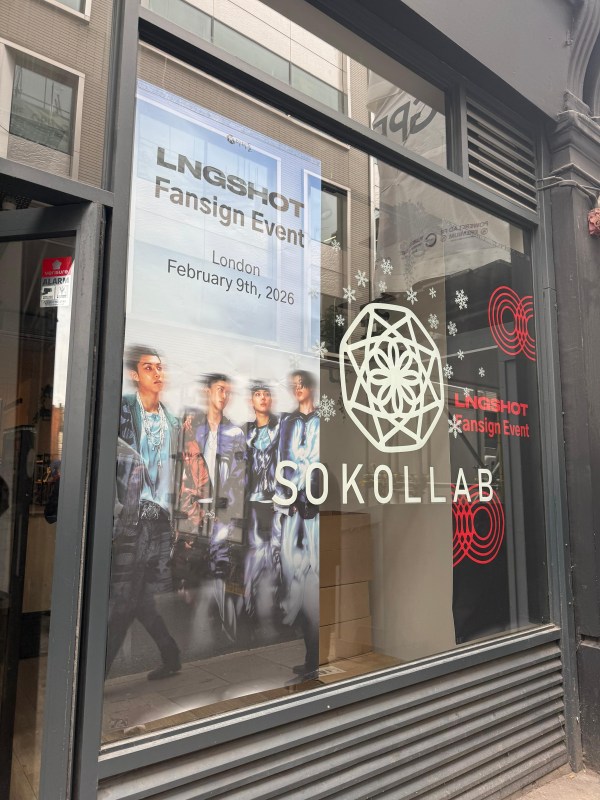
Who are LNGSHOT?

LNGSHOT is a four-member South Korean boy-group under the company MORE VISION. The group consists of: Kwon Ohyul, Kim Ryul, Jung Woojin and Louis Elliot Jordain Lim. They officially debuted on January 13th 2026 with the EP “SHOT CALLERS“.

THE EVENT:

The event was hosted by SOKOLLAB at their store at 14 Rathbone Place, London, W1T 1HT on 9th February 2026. The actual event started at 3pm, though they asked fans to line up from 2-3PM to check-in. During the fan-sign, fans could greet artists and have a brief 30-second conversation during their turn with each of the members (Ohyul, Ryul, Woojin and Louis) till they are prompted by staff to move along.

Fans album unboxings:

Cece C, a fan who attended the LNGSHOT fansign:

“It felt like a really intimate interaction… you could connect with them on a different level.”

Her words reflect the emotional value fans placed on the opportunity to interact with the group in a more personal setting.

REFLECTIONS:

As fan-sign events are still relatively rare in the UK, the success of this event suggests there is a clear demand for more opportunities that allow fans to engage with artists in a more personal setting. Beyond fan engagement, events like this also serve as an effective way for artists and organisers to strengthen fan loyalty while supporting album and merchandise sales.

Image credits – @/c3ce.34 on Instagram.

[ARTICLE] Why do brown girls like K-pop so much?

Psst.. it’s more than the music and pretty faces!

INTRO

K-pop = Korean pop: A form of popular music originating in South Korea. It emerged in the 1990s as a form of youth subculture, with Korean musicians taking influence from Western dance music, hip-hop, R&B and rock.

It has in the past decade become very popular due to social media and video streaming apps. For example, if you’re from the West, think back to the very first K-pop song you’ve ever heard and when – I bet it’s the famous “Gangnam style” by Psy which dropped in 2012. This was the first Youtube video to hit 1 billion views. Although people didn’t necessarily understand what was going on, it engaged people of all ages to enjoy the content.

DATA ANALYSIS

Due to the specific focus of my research, I created a Google Form to collect responses directly from people within the community Iโ€™m interested in. I know there might be some limitations with the validity and reliability of the data – such as the sample size being 46 – so this isnโ€™t a super reliable study โ€” but it still gives useful insights!

This pie chart shows the age range of the sample that answered the Google Forms.

Here’s what I wanted to know!

  1. On a scale from 1-10, how much do you feel K-pop influences your identity the most? And why?
  2. Why do YOU like K-pop so much?
  3. What do you think makes K-pop so popular amongst brown girls?
  4. Have you ever experienced any challenges or stereotypes by being a K-pop fan?
  5. Has K-pop influenced your view on your own culture and how?
  6. What do you think your life would be like without K-pop?

Figure 1 represents the answers I received for part of question 1.

Figure 1

Common themes I identified in question 2: “Why do YOU like K-pop so much?”:

Fashion and self-expression“Fashion wise, dance wise, love the work ethic of the idols.”, “How I do my looks like fashion and makeup and how I be so careful about my digital footprint”

Emotional support and belonging“It’s like comfort, and I see myself in them so much.”, “They’re my peace sometimes yk when ppl are too loud.”

Cultural connection and inspiration“As a South Asian second gen immigrant in the UK.. appreciation of Eastern cultures has contributed alot to my identity”, “It helped me feel more content about coming from an Asian background.”

Friendship and community“It’s the first proper interest I shared with my closest friend.”, “I wish I had a friend group like SEVENTEEN – goofy, supportive and full of love.”

Personal development and self-confidence “It has a big impact on my confidence and how I feel in my own skin.”, “Being in the fandom has low-key made me forget what embarrassment even feels like ๐Ÿ˜ญ.”

However, will all this being said, not everyone saw it as central or significant to their identity:

  • “It’s just music for me.”
  • “It’s just a hobby. I don’t expect my moral grounding from it.”
  • “It’s more of something that I like, not my whole life.”

This mix of responses shows that, although K-pop isn’t a prominent identity marker for all, for many it subconsciously shapes parts of their personality, interests or how they present themselves – whether that is through fashion, friendships, demeanor or just having something to look forward to!

After exploring how K-pop influences identity on a broad level, I was interested in the respondents’ personal reasons behind this connection – question 3 – the answers reveal the emotional depth behind what many dismiss as just another music genre.

Many participants gave responses that went beyond the music itself; K-pop was described as a comfort/ escape, especially during difficult moments. Majority of the participants said their variety of content (such as vlogs and variety shows) made them feel more connected to idols – not just as artists but as people: “It feels like you really know them.”. Others expressed how the industry focuses on storytelling (concepts), choreography performance and aesthetics provided them with a sense of joy and belonging which they believed was missing from Western music. Several responses also mentioned the feeling of being “apart of something bigger”, whether that was through fandoms, collectively voting for them to win awards or relating to their personalities. These responses suggest that for many, K-pop plays a role in shaping emotional identity and building community, much more than just music.

What do you think makes K-pop so popular amongst brown girls?

Cultural proximity and familiarity- brown girls relate to certain aspects of Korean culture due to similar shared values with South Asian cultures:

  • Honorifics e.g. “baji/ bhai” vs “oppa/ unni”
  • Respecting elders
  • “Korean families are very similar to brown families.. it makes you feel at home.” – despite being foreign, familiarity with collectivism and modesty helps brown girls connect deeply.

Representation – K-pop validates non-western identities and allows people to be proud of those roots:

  • “It was one of the first times we saw non-Western culture being appreciated and taken seriously.” – this contrasts to how the world treats South Asians, although we aren’t from the East, it’s the closest we’ll get for now for a sense of belonging and appreciation.
  • “Seeing non-white idols be famous all over the world just hits different.”
  • “K-pop shows you that you don’t have to be white to be cool or loved.” – brown girls often grow up in Western societies that make them feel marginalised; K-pop empowers them to embrace being “different”.

Escapism – K-pop offers an emotional escape from strict households and stressful expectations:

  • “Most brown girls are not really allowed a social life.”
  • “It’s a getaway from home life and expectations.”
  • “It allows us to explore a part of ourselves we can’t find in our culture.”

K-pop becomes an emotional outlet in environment where expression is limited – a safe place to feel connection.

Fandom culture – K-pop communities provide social connection and acceptance:

  • “Finding people online who share this love has made the experience infinitely better.”
  • “Gives us a sense of freedom to be who we are.”

In restrictive environments, fandoms offer a platform where brown girls can express themselves freely without judgement.

Soft masculinity – It is found that K-pop male idols present a form of masculinity that is much less toxic and more emotionally vulnerable:

  • “They’re not scared to be soft or emotional.”
  • “Male idols can be affectionate and artistic without being called feminine.” – however I may contradict this with K-pop antis who seem to project their own potential insecurities to put them down-!

Brown girls who are raised in patriarchal cultures often find comfort in male idols who are emotionally expressive and don’t embody hyper-masculinity. Interestingly, some Western critics call those into K-pop “man haters”, funny enough the men these fans “hate” are those brought up on Western culture – this contrast highlights possible cultural biases or misunderstandings.

Have you experienced any challenges/ stereotypes by being a K-pop fan?

Many brown girls shared that being a K-pop fan came with its challenges and stereotypes. For example, some faced teasing – “childish” and “crazy” – by those who didn’t understand their passion. One participant said “People think it’s weird or obsessive like I’m too old to be into it.”. Another shared “They’re like “You’re 18 and you like K-pop?”” – suggesting that there is some pressure to “grow out” of it. Others mentioned racial assumptions e.g. “Don’t you like all Asians?” and “My family and friends telling other people I’m going to marry a Korean man ๐Ÿ˜ญlike please… (but if it’s Jungkook I’d be getting the rings out right now LOL)” – sorry I had to include the last part of that second one it was hilarious.

Family can also be a challenge, especially in strict households where K-pop isn’t always accepted. As one person explained: “I literally have to hide myself indulging in a hobby yk, can’t watch anything with them around, hiding albums, staying up late to watch stuff in bed with headphones on.. it sucks I can’t be open about my hobby,”. There are also misunderstandings about the language barrier; a few noted people mock them and assume they do not understand what they are listening to as if the Internet doesn’t exist – #IloveGenius.

However, many said that as K-popโ€™s popularity grows, these challenges have become less evident. A participant shared, โ€œNow, more people get it, so the teasing happens less.โ€. Others found support online, saying, โ€œFinding people in the fandom made me feel less alone.โ€ Some havenโ€™t faced direct discrimination but have noticed subtle judgment, like being given side eyes for their interests.

However, despite these challenges, many of the respondents expressed pride in this and said the fandoms they are in are seen as a safe space where they can be themselves with no fear – “It allows us to explore a part of ourselves we can’t find in our culture.”

Has K-pop influenced the way you view your own culture and how?

Many participants said that K-pop has definitely influenced how they view their own culture by similarities in discipline and family values. For instance, one respondent shared “Seeing another culture hold onto their traditions and still be global made me think maybe ours isn’t something to be ashamed of either.”. Another said, “It made me realise how much we suppress fun or creativity in our culture, especially for girls.”. It low-key exposes the flaws in your own culture – stuff you never questioned starts to feel unfair.

Still, of course I’ll include all perspectives given and not make this a one-sided argument. A few participants said that K-pop didn’t really affect how they view their own culture“It’s just music. I don’t connect it to my culture at all.” So, while some brown girls reported deeper cultural reflection because of K-pop, others kept the two things separate, which could be due to a confounding factor such as age or how deeply they engage with the genre.

What do you think your life would be without K-pop?

This question received some of the most emotionally reflective and detailed answers in the whole Google Forms. Many respondents couldn’t imagine a version of themselves without it, not in a way that you’d call dramatic, but honest. One said, “Honestly, as dark as it sounds – I probably wouldn’t be here without BTS. K-pop helped me learn to love myself.”. This type of emotional impact elucidates how K-pop and its inclusions have acted as a support systems during major life events: “As dramatic as it sounds, K-pop was there when I was doing my GCSEs, A-levels, graduating university, getting a job in healthcare and even getting married.”

There were also practical lifestyle changes; people spoke about learning new languages, gaining the confidence to travel and even pursuing different careers due to K-pop. One participants wrote, “In the span of 4 years, I learnt Korea and studied abroad in Korea.. I think that experience changed how I view the world.”. Another added, “I think it changed a lot about how I look at the world, take up information and apply it. If I become a national-level government employee with a deep interest in geopolitics because of a playlist, it was all worth it!”

Then there were answers that were less intense but still honest, which I appreciated as it gives me a range of data to work with. Responses like: “I’d probably just be into other hobbies,” or “I think I’d be fine without it.” A few responses acknowledged they had moved on from it – “I used to be deep into it, but I’ve grown out of it now.”. Even so, the general pattern was clear – most participants felt that K-pop shaped their identity, built community and gave them something to feel excited about. One summed it up as, “Without K-pop I’d be more reserved and cold,” while another jokingly said, “I’d probably be getting more than 7s in my GCSE’s”.

ANECDOTE

This research isnโ€™t focused on numbers โ€” itโ€™s mainly about the rich, personal stories and experiences that provide deeper insights into what it means to be a K-pop fan like me. I’m a brown girl who doesn’t fit the typical image people visualise when they think of a K-pop stan. I donโ€™t go to concerts nor spend my savings to win a fancall with my bias, but I still value it as a reminder that connection doesnโ€™t have to be loud.

For me, groups like ENHYPEN are more than just a K-pop group โ€” theyโ€™re a quiet source of comfort even from miles away. Watching their variety show โ€œEno’clockโ€ genuinely brightens my day. It may seem minor, but โ€œJust got to make it to Thursdayโ€ has become the new โ€œJust got to make it to Fridayโ€ for me!

That might sound pathetic to non-K-pop stans, but Iโ€™ve come to not care. People will criticise you for anything โ€” you canโ€™t please everyone. So let them hate; Iโ€™m sorry theyโ€™re miserable while I know what makes me happy, lmao!

This feeling differs from when I hyperfixate on Western celebrities or groups because with K-pop, you can tell the artists really appreciate their fans. Itโ€™s nice to feel like youโ€™re part of something, even if youโ€™re not the one on stage. For example, ENHYPEN has won a few awards and they always start their speeches with โ€œEngene!โ€ โ€” such a small thing, but it makes me feel appreciated, even though Iโ€™m just โ€œOne In A Billion.โ€

Create a website or blog at WordPress.com

Up ↑